Playstyles Lab

Playstyles Lab

Playstyles Lab

Product Design

UX/UI Design

Rapid Prototyping

Facilitating Co-creation Sessions

Speedrunning a new popular feature

When we learned that EA was preparing to launch a new feature in FC26 called PlayStyles Lab, we didn’t yet know exactly how it would work. What we did know was that it seemed to let players customize certain cards with different playstyles — essentially giving them new power-ups.

Instead of waiting for the official release, we decided to move quickly. We brainstormed how such a feature could work inside EasySBC, explored what would be most useful for our users, and designed and implemented our own interpretation of PlayStyles Lab before the feature was publicly available. In a matter of 5 days, our new feature was released. And more importantly - our users loved it.

Average session time

Average session time

381.61

381.61

01 Problem

02
Problem

Because PlayStyles Lab had not been released yet, we were working with limited information. We understood the overall concept, but the exact constraints were still unclear — which players would be eligible, how many playstyles could be added, what rules would apply, and how the final feature would behave in-game.

The challenge was to move fast without overcommitting to assumptions. We needed to design an experience that felt useful and believable, while staying flexible enough to adapt once more details became available.

This raised a key design question:

How might we help users explore a new and uncertain FC26 feature in a way that feels clear, useful, and easy to adjust as more information becomes available?

02 Process

Lo-fi sketches

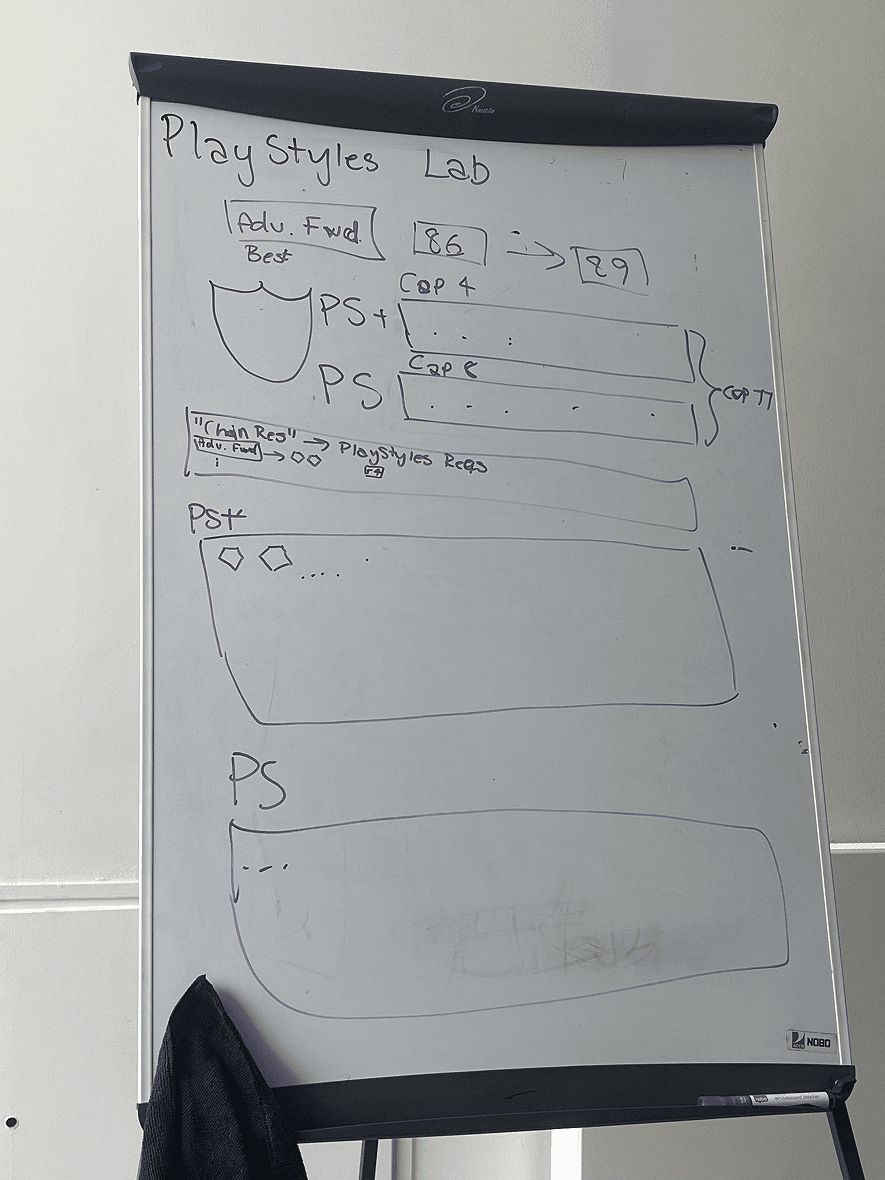
We kicked off our brainstorm session by sketching on a white board. At this point we suspected the feature would work a lot like the evolutions concept. This lo-fi sketch aligned us and gave me enough context to start wireframing in Figma.

Sketching the desktop and mobile version in Figma

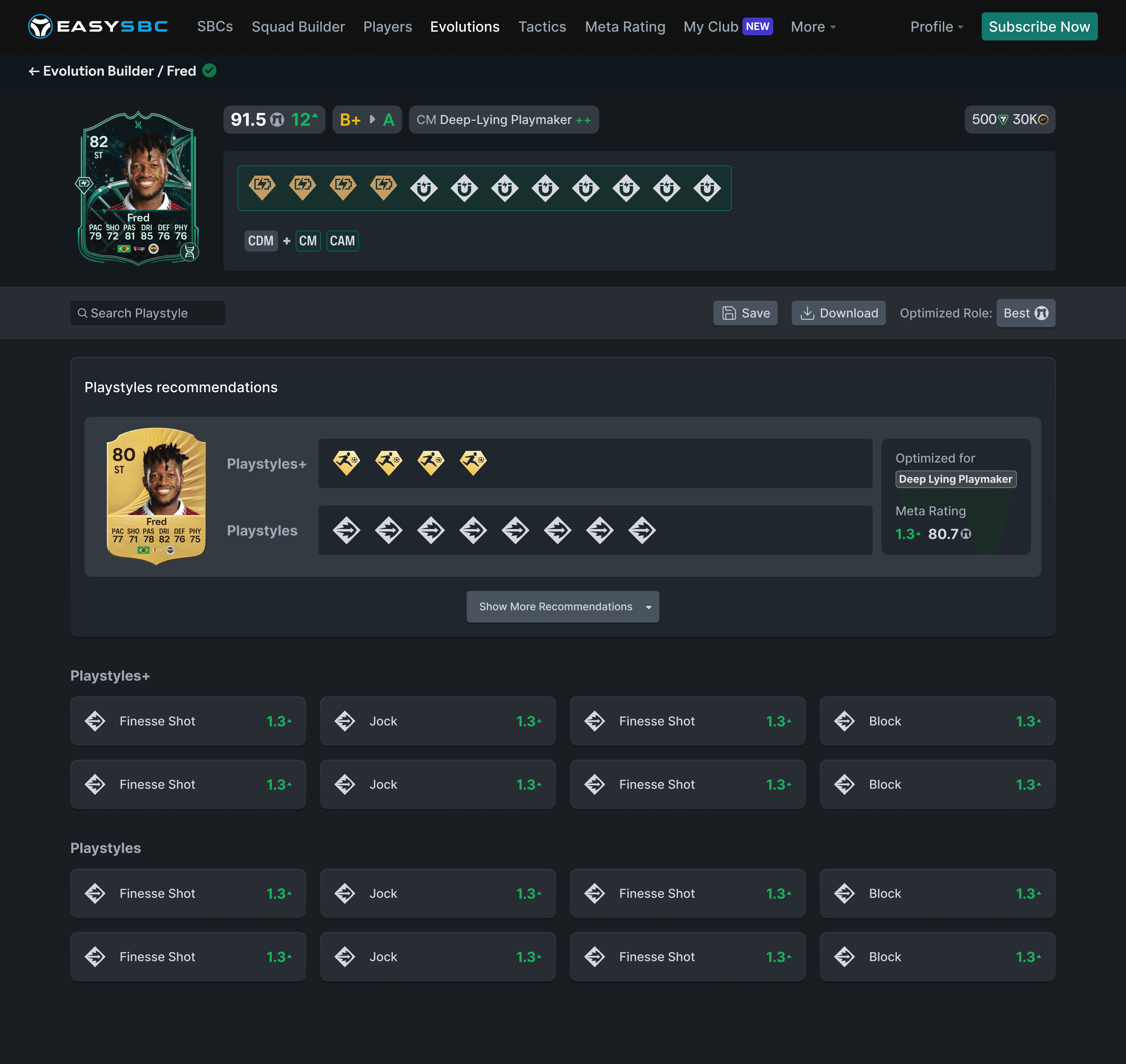
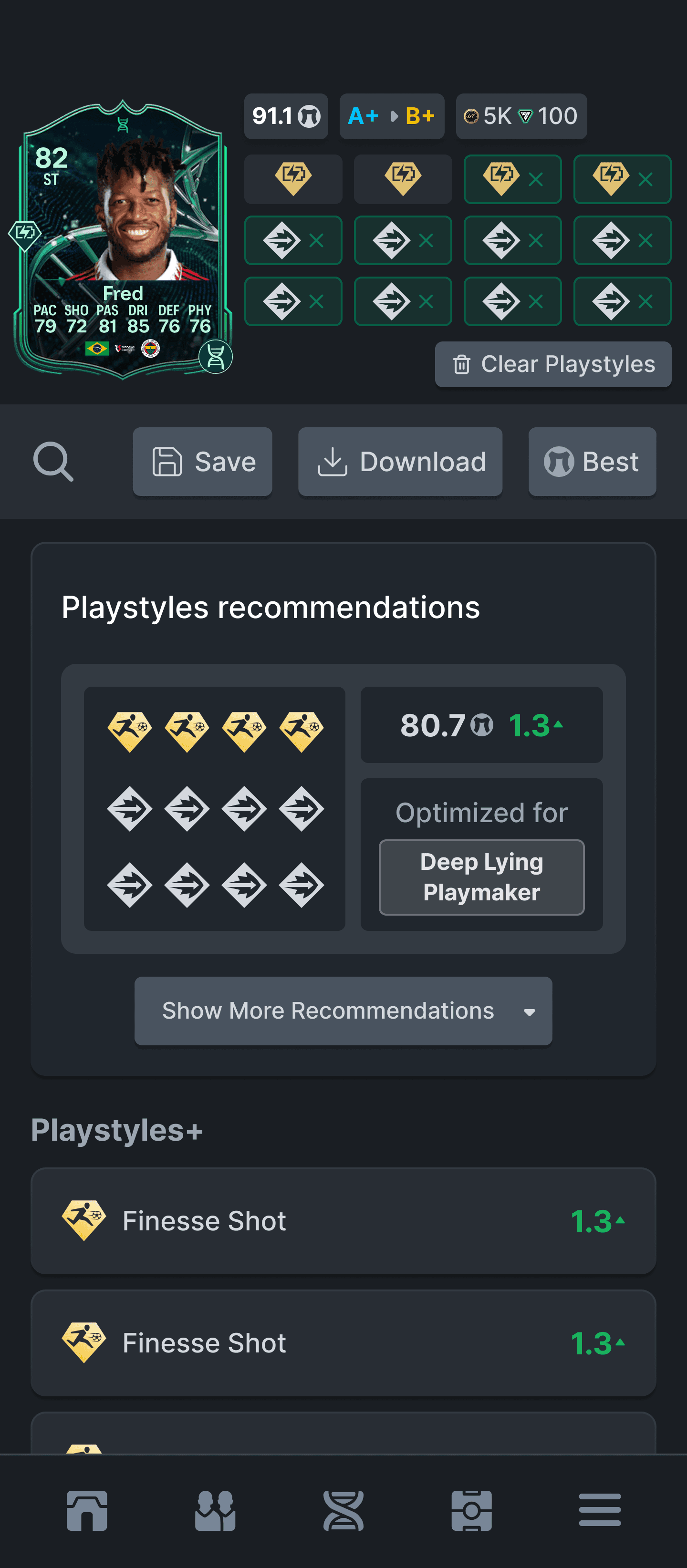
After sketching the core flow on a whiteboard, we moved into Figma to explore both the desktop and mobile experience.


This helped us understand how the feature should adapt across screen sizes. Desktop gave us room to show more information and comparisons at once, while mobile required a more focused and scannable flow.

Making it easy for the user to choose playstyle combinations

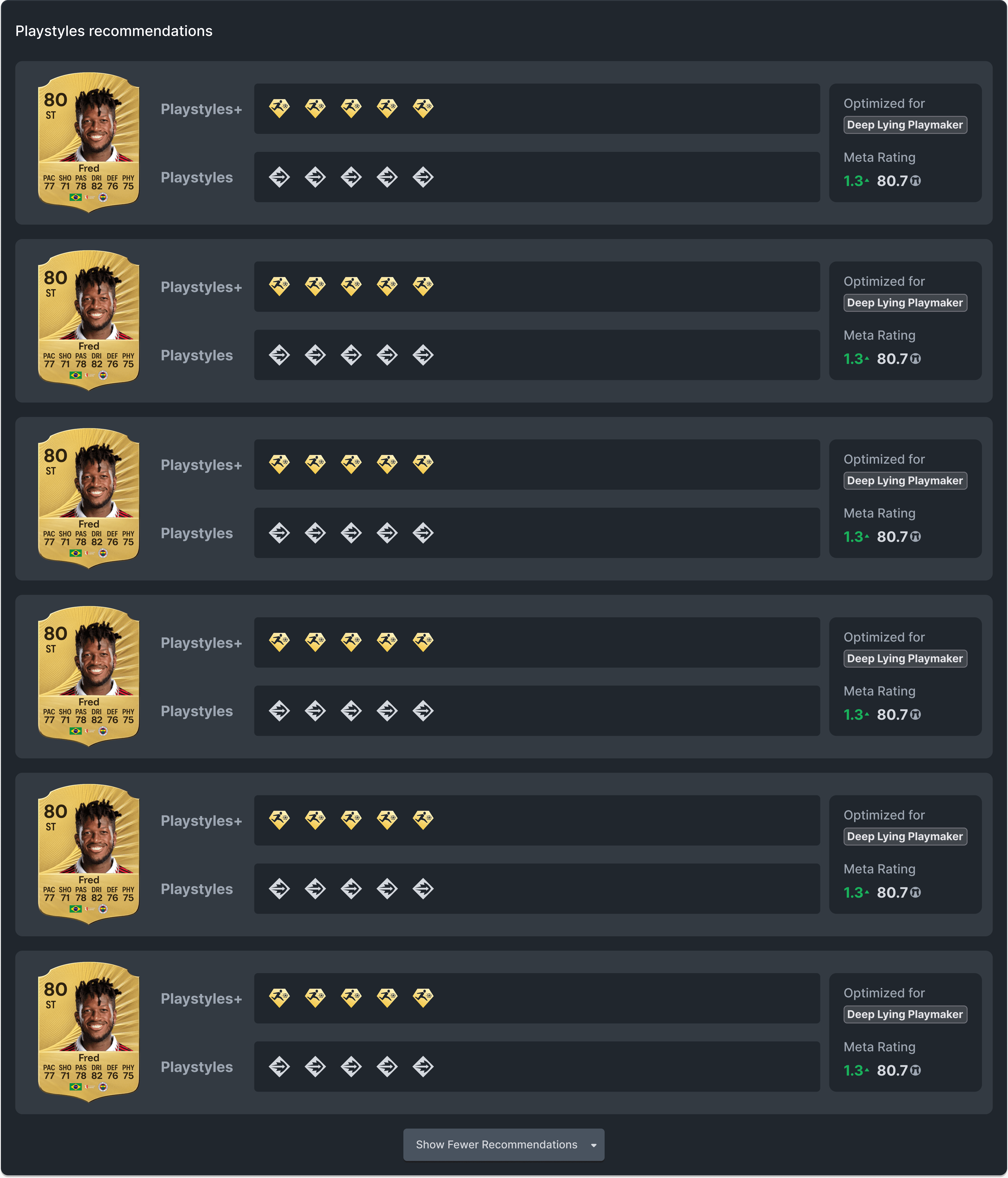
One of the core parts of the feature was playstyle recommendations. Instead of asking users to manually compare every possible combination, we wanted the tool to calculate which playstyle combos made the most sense for a specific player role.


The recommendations showed which combinations produced the highest meta rating gain, making it easier for users to understand not just what they could choose, but what would actually improve the player the most.


This was especially important because playstyles can quickly become difficult to evaluate in isolation. A single playstyle might look useful on its own, but the real value often depends on the player’s position, role, stats, and how the combination affects their overall in-game performance.

03 Impact and learnings

Only five days after launch, the early data showed that users were responding well to the feature. PlayStyles Lab was already approaching the popularity of our most-used feature, Evolution Builder, and the average session duration was even higher — reaching 381.61 seconds.

Of course, there is still room for improvement. Design is always iterative, and the next step would be to speak with users, understand where they still experience friction, and learn why some users drop off.

But in a fast-moving product space, speed matters. For this project, the goal was to quickly identify a feature users were likely to care about, turn an uncertain concept into a useful tool, and launch it before our competitors.

This project taught me that designing under uncertainty requires a balance between speed and flexibility. Since PlayStyles Lab had not been released yet, we had to make assumptions without locking the experience too tightly around them.

It also showed that users do not just need access to customization — they need help making good decisions. By recommending the strongest playstyle combinations and showing the expected meta rating gain, we made a complex feature easier to understand and act on.

A final learning was that familiar product patterns can help users adopt new functionality faster. By using our Evolution Builder as a foundation, we could introduce a new concept while keeping the experience aligned with something users already understood.

02 Process

Lo-fi sketches

We kicked off our brainstorm session by sketching on a white board. At this point we suspected the feature would work a lot like the evolutions concept. This lo-fi sketch aligned us and gave me enough context to start wireframing in Figma.

Sketching the desktop and mobile version in Figma

After sketching the core flow on a whiteboard, we moved into Figma to explore both the desktop and mobile experience.


This helped us understand how the feature should adapt across screen sizes. Desktop gave us room to show more information and comparisons at once, while mobile required a more focused and scannable flow.

Making it easy for the user to choose playstyle combinations

One of the core parts of the feature was playstyle recommendations. Instead of asking users to manually compare every possible combination, we wanted the tool to calculate which playstyle combos made the most sense for a specific player role.


The recommendations showed which combinations produced the highest meta rating gain, making it easier for users to understand not just what they could choose, but what would actually improve the player the most.


This was especially important because playstyles can quickly become difficult to evaluate in isolation. A single playstyle might look useful on its own, but the real value often depends on the player’s position, role, stats, and how the combination affects their overall in-game performance.

03 Impact and learnings

Only five days after launch, the early data showed that users were responding well to the feature. PlayStyles Lab was already approaching the popularity of our most-used feature, Evolution Builder, and the average session duration was even higher — reaching 381.61 seconds.

Of course, there is still room for improvement. Design is always iterative, and the next step would be to speak with users, understand where they still experience friction, and learn why some users drop off.

But in a fast-moving product space, speed matters. For this project, the goal was to quickly identify a feature users were likely to care about, turn an uncertain concept into a useful tool, and launch it before our competitors.

This project taught me that designing under uncertainty requires a balance between speed and flexibility. Since PlayStyles Lab had not been released yet, we had to make assumptions without locking the experience too tightly around them.

It also showed that users do not just need access to customization — they need help making good decisions. By recommending the strongest playstyle combinations and showing the expected meta rating gain, we made a complex feature easier to understand and act on.

A final learning was that familiar product patterns can help users adopt new functionality faster. By using our Evolution Builder as a foundation, we could introduce a new concept while keeping the experience aligned with something users already understood.

Create a free website with Framer, the website builder loved by startups, designers and agencies.